EVENTS
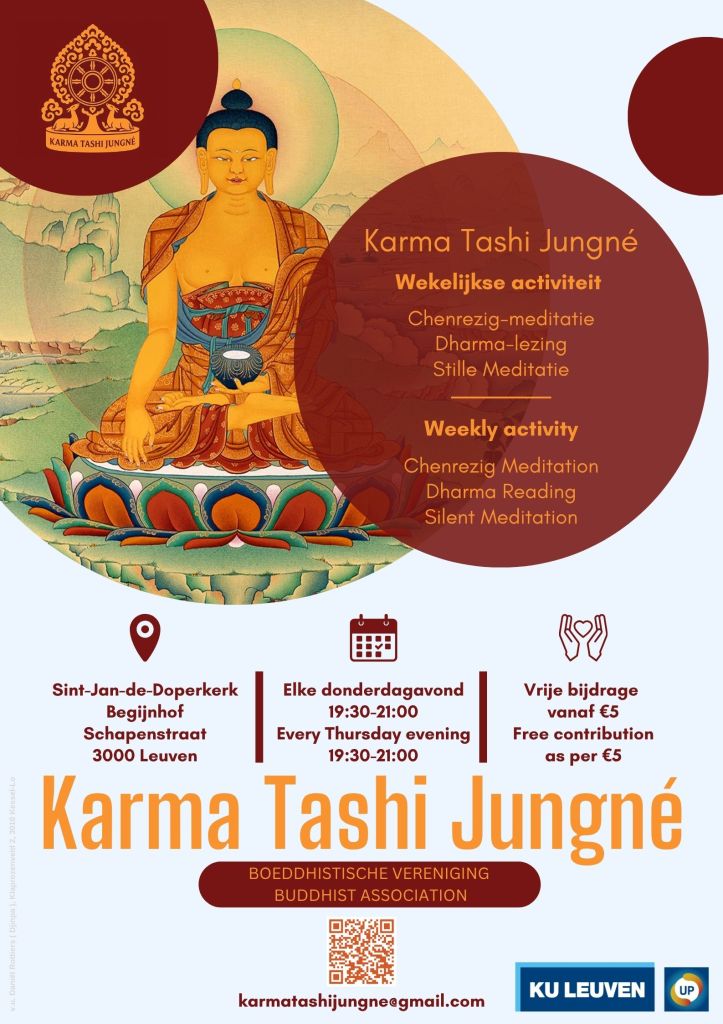
WEEKLY THURSDAY MEDITATION:
DATE & TIME: Every Thursday, 7.15-9.30pm, free contribution as per €5
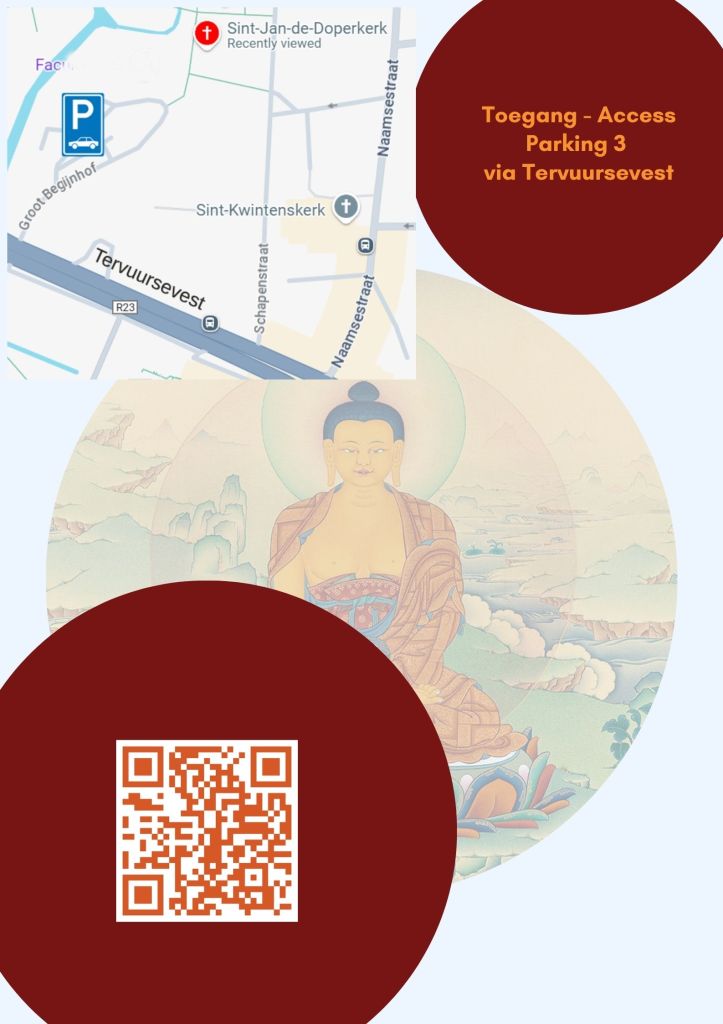
LOCATION: St. John the Baptist Church, Great Beguinage, 3000 Leuven, Belgium
Chenrezig Sadhana
A Practice of Compassion and Loving Awareness
The Chenrezig Sadhana is a traditional Tibetan Buddhist meditation practice dedicated to Chenrezig (Avalokiteshvara), the embodiment of universal compassion. Through visualization, mantra recitation, and mindful awareness, practitioners cultivate an open heart and a deep connection to the suffering and well-being of all beings.
At the heart of this practice is the repetition of the sacred mantra:
Om Mani Padme Hum
This mantra is believed to carry the essence of compassion, purifying negative emotions and awakening wisdom. As it is recited, practitioners visualize Chenrezig either above their head or within their heart, radiating light and love in all directions.
The sadhana typically includes:
- Refuge and intention setting – grounding the practice in altruistic motivation
- Visualization – imagining Chenrezig as a luminous presence of compassion
- Mantra recitation – focusing the mind and opening the heart
- Dedication of merit – offering the benefits of the practice to all beings
Accessible to both beginners and experienced meditators, the Chenrezig Sadhana is a powerful method for transforming self-centered patterns into compassion, kindness, and clarity. It invites practitioners to embody compassion not only in meditation, but in everyday life.
Dharma Lecture
Exploring Wisdom for Everyday Life
A Dharma lecture is a session within the Buddhist tradition that explores the Dharma—the teachings of the Gautama Buddha—and how they can be understood and applied in daily life.
Dharma lectures often focus on core themes such as:
- Mindfulness and awareness
- Compassion and loving-kindness
- The nature of suffering and its causes
- Impermanence and interconnection
- Practical ways to cultivate wisdom and inner peace
Rather than being purely theoretical, a Dharma lecture is meant to be practical and reflective.
These sessions may include:
- A period of silent meditation
- The main talk
- Time for discussion
Open to people of all backgrounds, Dharma lectures provide a supportive space to deepen understanding and explore a path of greater clarity, compassion, and freedom.
Silent Meditation
Cultivating Stillness, Insight, and Compassion
Silent meditation offers a space to turn inward, quiet the mind, and reconnect with the natural clarity and warmth of awareness. Rooted in Buddhist practice, these sessions are typically guided by three complementary approaches: calm abiding, insight meditation, and loving-kindness.
Calm Abiding (Shamatha)
Resting the Mind in Stillness
Calm abiding meditation develops stability, focus, and inner peace. Practitioners gently place attention on a simple object—such as the breath—and return to it whenever the mind wanders. Over time, this practice settles mental agitation and creates a sense of spacious, steady awareness.
It is the foundation for deeper meditation, helping the mind become clear, balanced, and receptive.
Insight Meditation (Vipashyana)
Exploring Insight and Understanding
Analytical meditation uses gentle inquiry to investigate the nature of thoughts, emotions, and reality. Rather than simply observing, practitioners reflect on questions such as impermanence, interdependence, or the causes of happiness and suffering.
This process leads to deeper understanding and insight, transforming habitual patterns into wisdom and clarity.
Loving-Kindness Meditation (Metta)
Opening the Heart to All Beings
Loving-kindness meditation cultivates unconditional friendliness and compassion. Practitioners generate sincere wishes for well-being—first for themselves, then gradually extending to loved ones, strangers, and all beings.
This practice softens the heart, reduces negativity, and nurtures a genuine sense of connection and care.
Together, these three forms of silent meditation create a balanced path:
- Calm abiding steadies the mind
- Analytical meditation deepens understanding
- Loving-kindness opens the heart
Accessible to both beginners and experienced practitioners, silent meditation supports greater presence, insight, and compassion in everyday life.