KARMA KAGYU SCHOOL
The Karma Kagyu school is one of the major lineages of Tibetan Buddhism, belonging to the broader Kagyu (“oral transmission”) tradition. It traces its origins to Indian Buddhist masters such as Tilopa and Naropa, and to Tibetan translators and teachers including Marpa and Milarepa. The lineage is historically associated with the Karmapas, a succession of reincarnate teachers who have played a central role in preserving and transmitting its teachings.
The Karma Kagyu tradition can be approached as a path that emphasizes meditation practice, direct experience, and the cultivation of insight into the nature of mind. Foundational teachings common to all Buddhist traditions—such as impermanence, suffering, and non-self—are combined with specific Kagyu methods, including Mahāmudrā meditation, which focuses on recognizing the mind’s inherent clarity and awareness.
From an academic perspective, the Karma Kagyu school is notable for its continuity of oral instruction, its emphasis on teacher–student transmission, and its integration of philosophical study with contemplative practice. Its textual corpus includes both Indian tantric sources and Tibetan commentarial works, reflecting a synthesis of doctrinal rigor and experiential methodology.
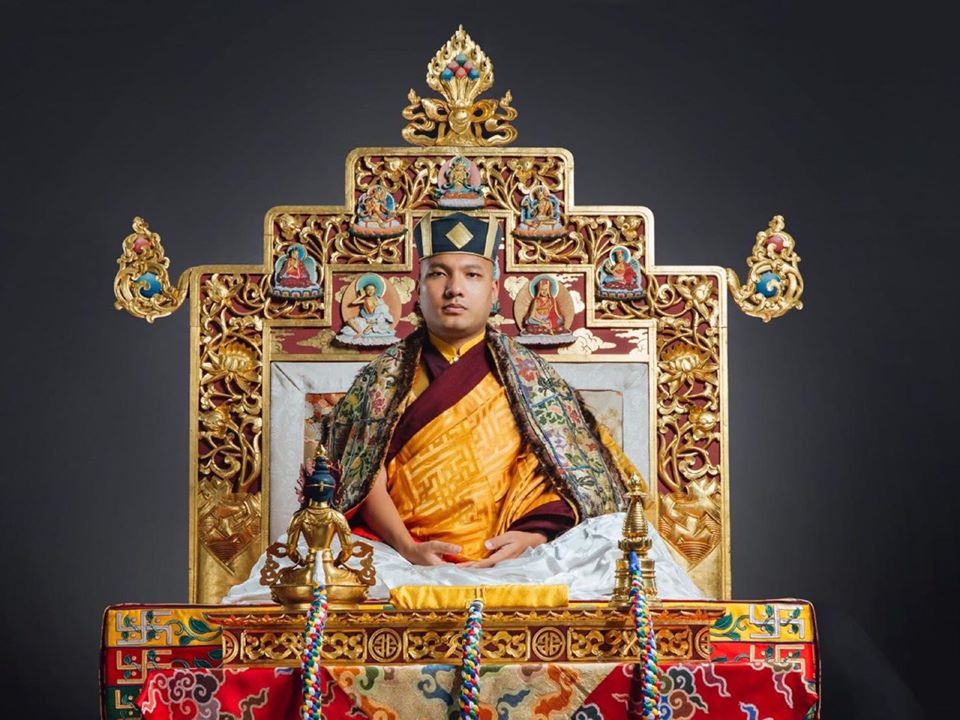
THE 17th KARMAPA – OGYEN TRINLEY DORJE
His Holiness the 17th Gyalwa Karmapa, Ogyen Trinley Dorje, is one of the most prominent spiritual leaders of Tibetan Buddhism and the head of the Karma Kagyu tradition. Born in Tibet in 1985 and recognized as the 17th Karmapa, he has dedicated his life to preserving Buddhist teachings while encouraging compassion, wisdom, environmental responsibility, and dialogue across cultures. Through his teachings, writings, and international engagement, the Karmapa inspires people around the world to cultivate greater awareness, kindness, and responsibility toward one another and the planet.